
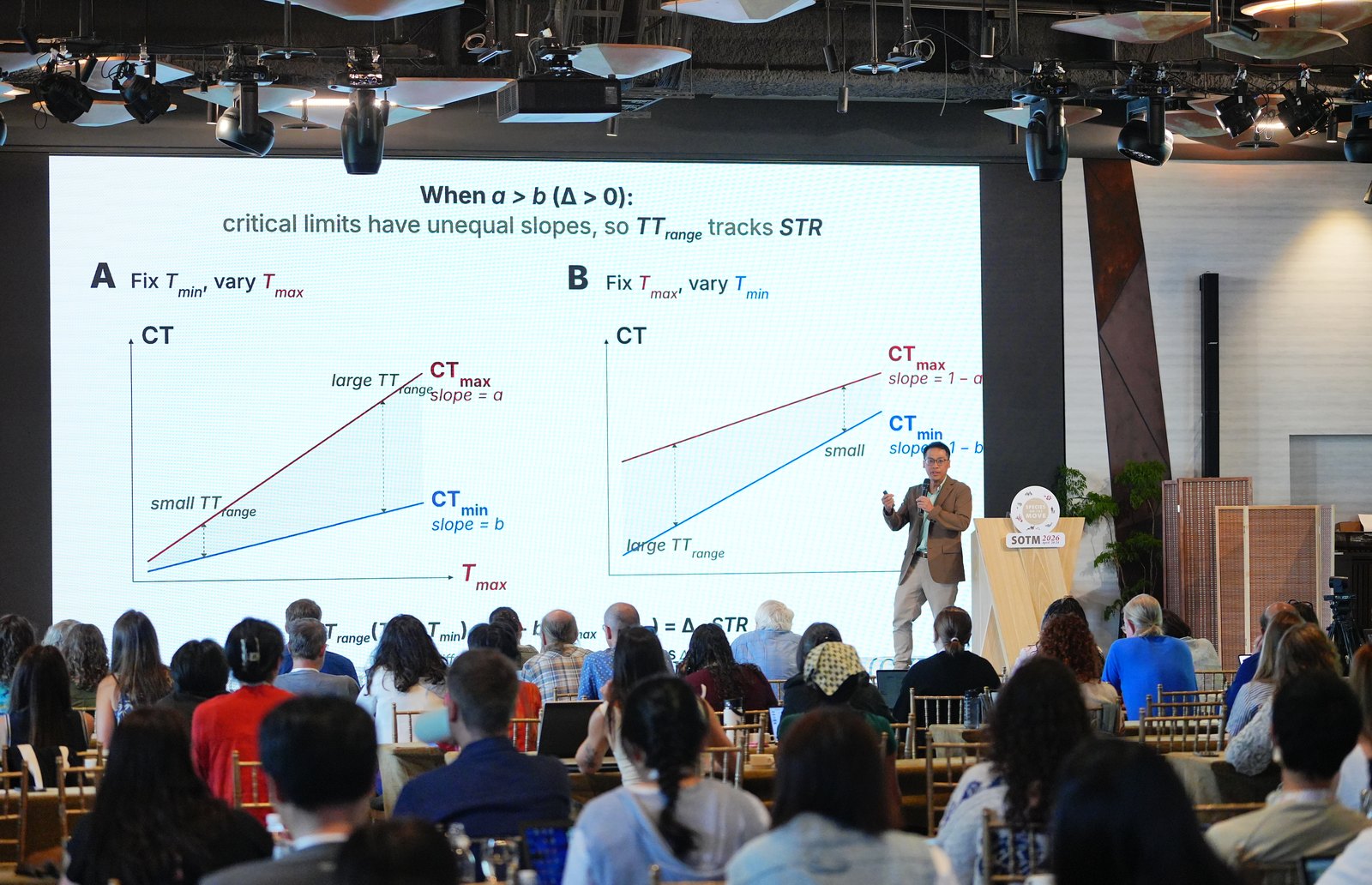
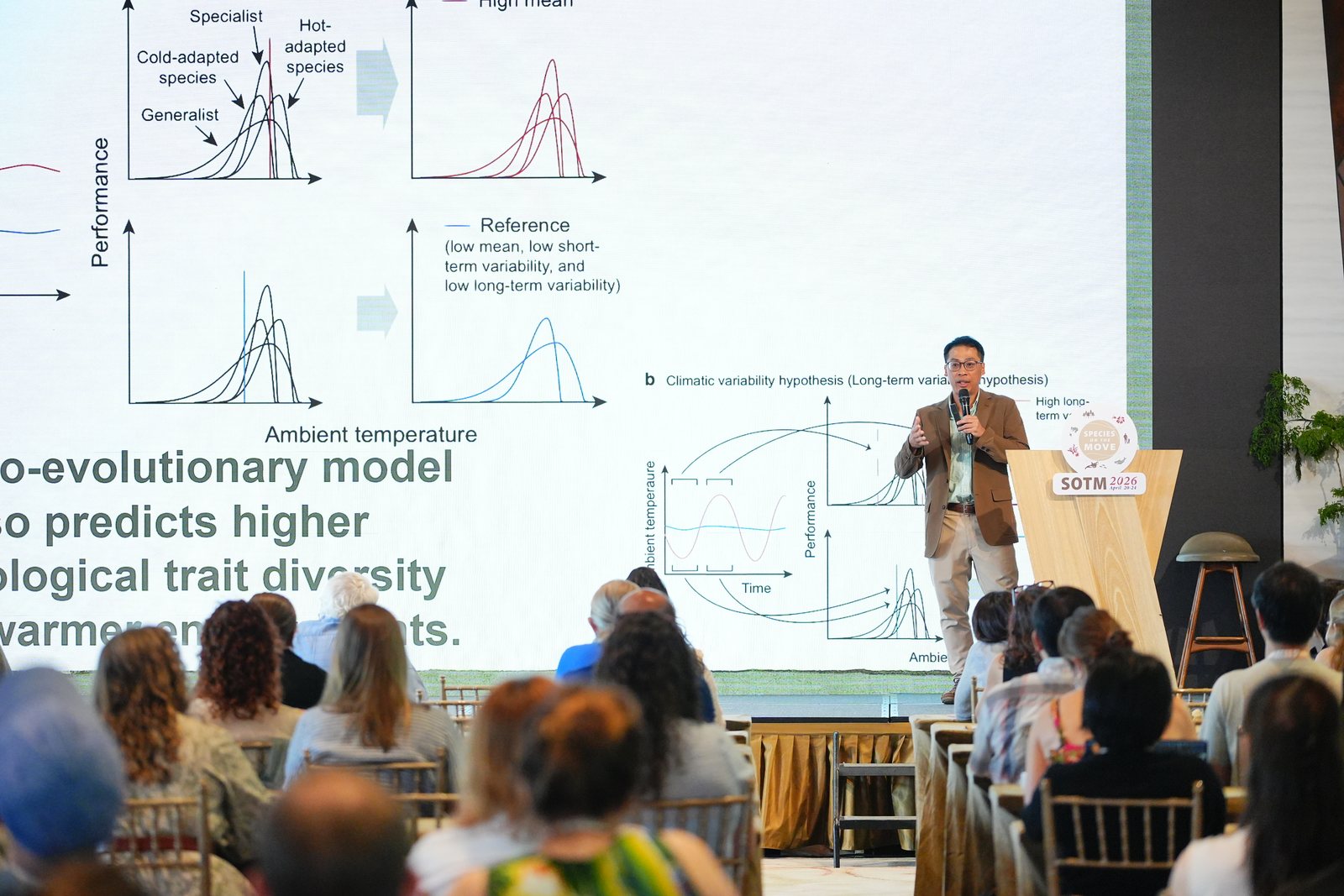
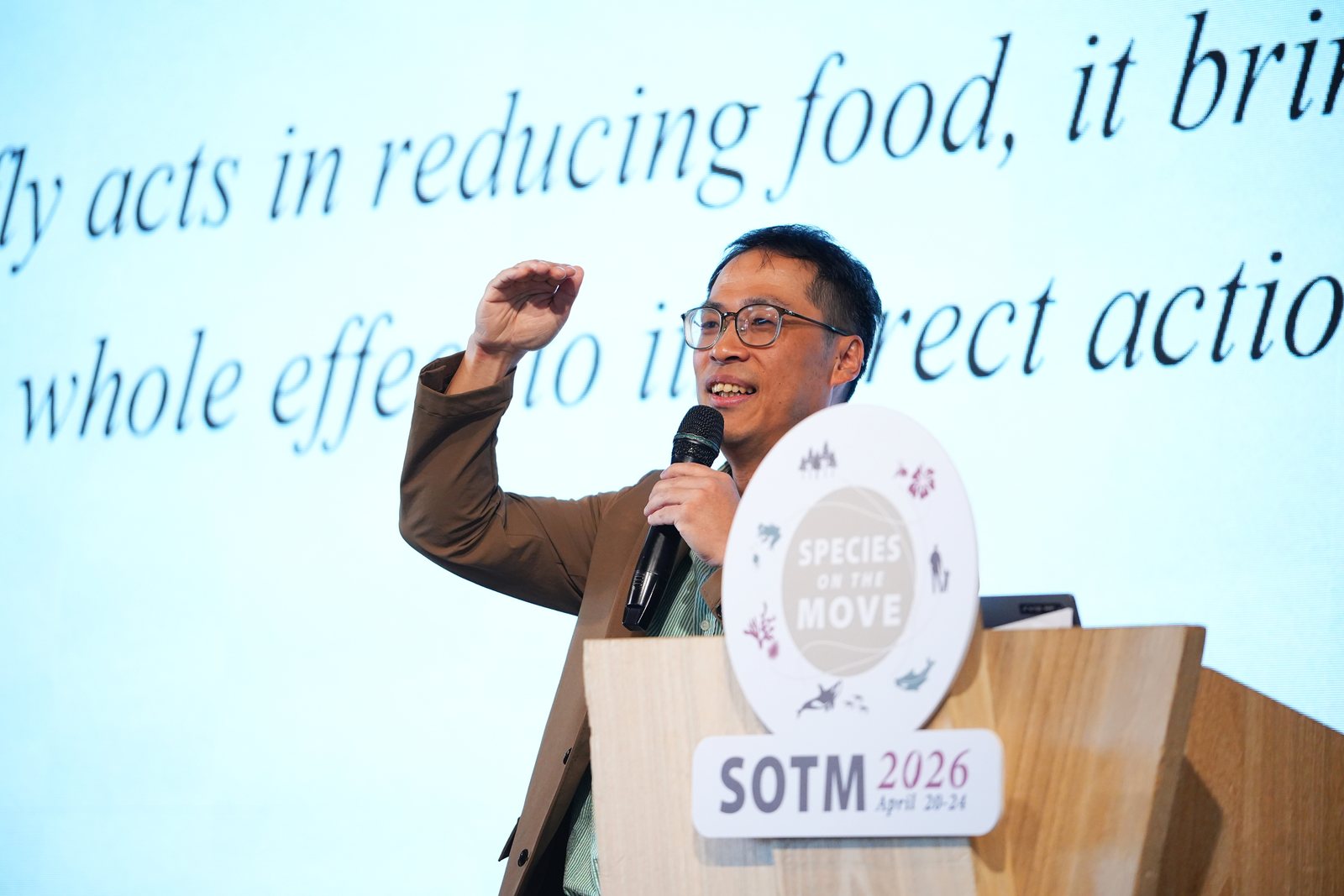
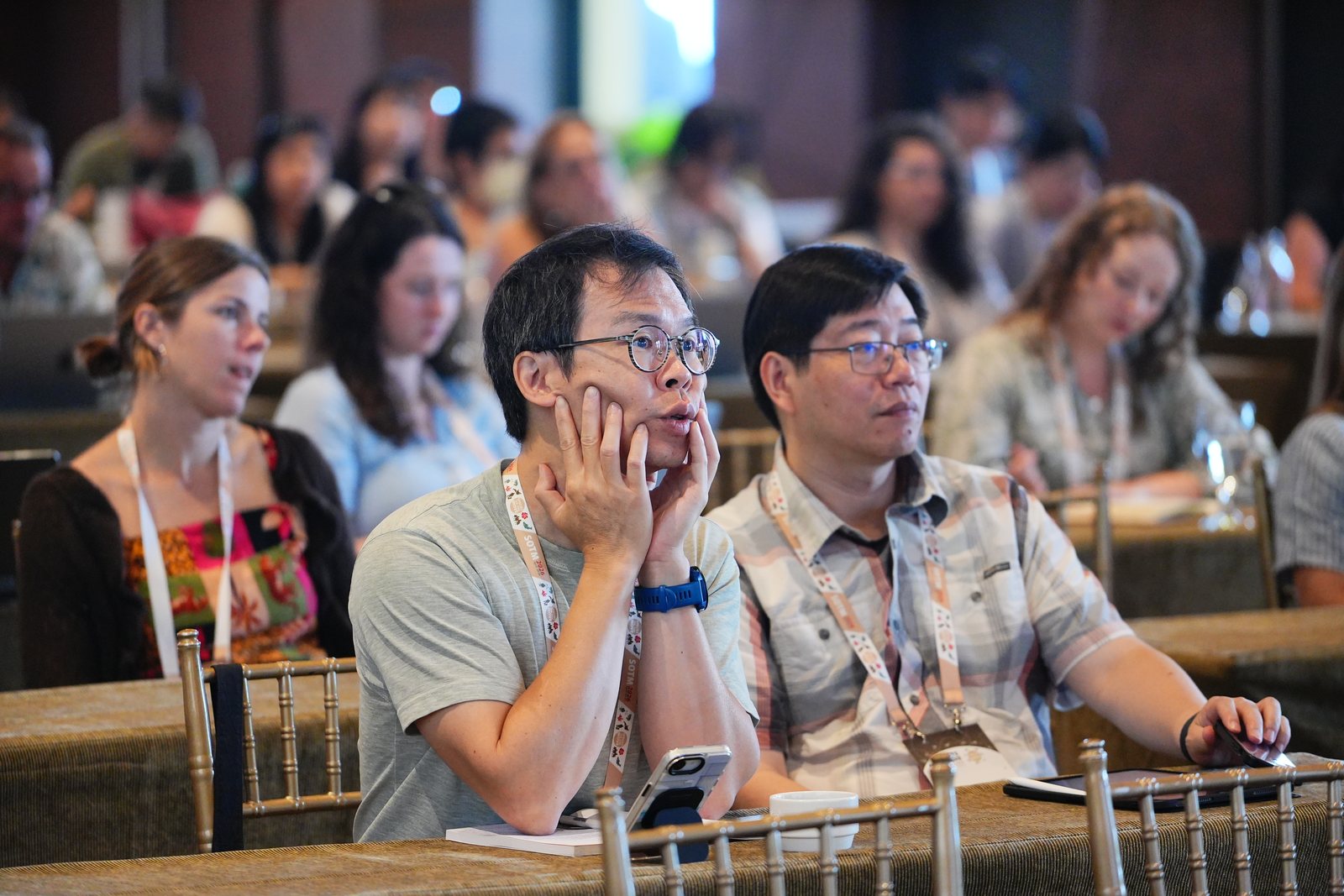
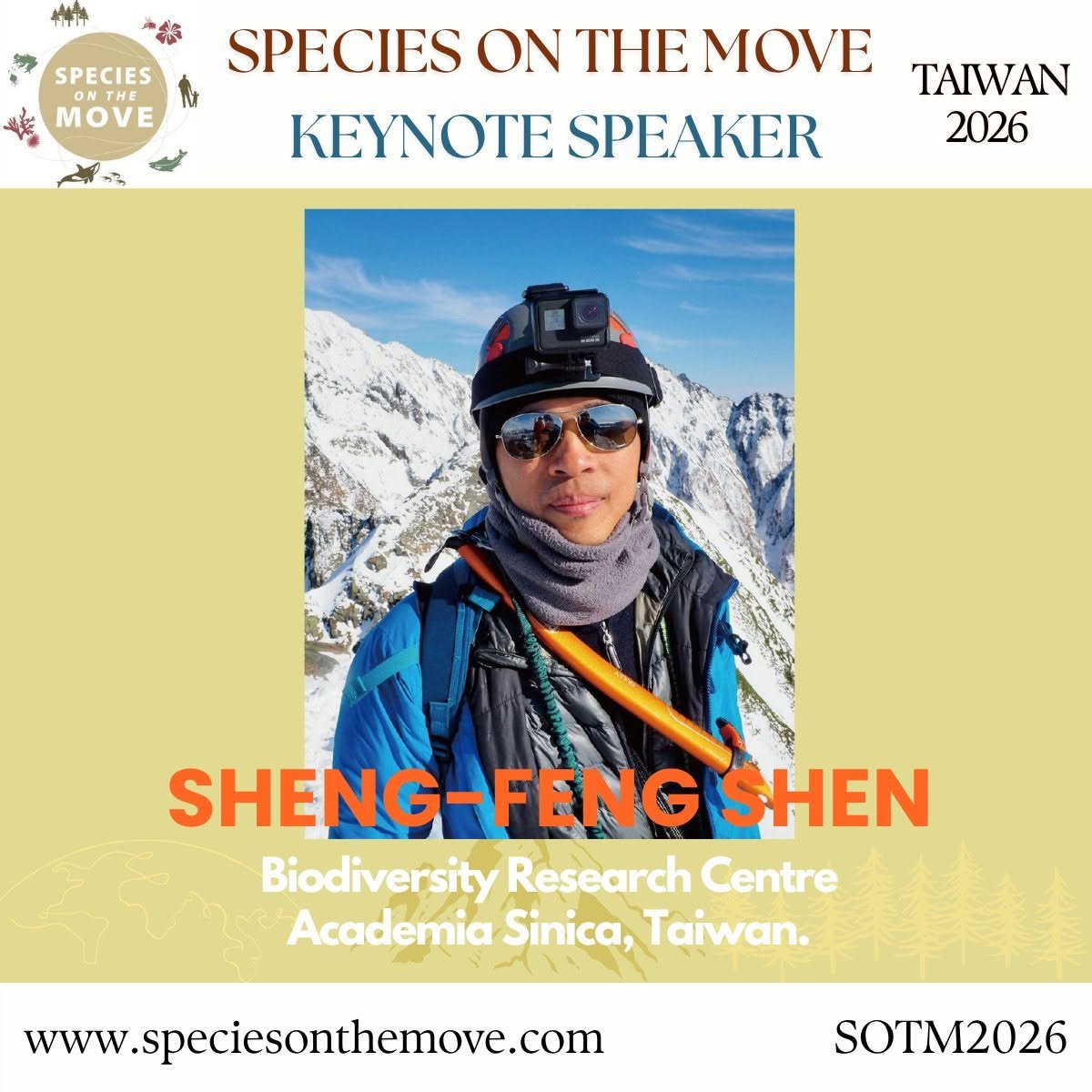
On 21 April 2026 Sheng-Feng Shen gave a keynote at Species on the Move 2026 at Sun Moon Lake, Taiwan, a conference on how climate change is redistributing life on Earth. The meeting, chaired by I-Ching Chen of National Cheng Kung University, marked the series’ tenth anniversary and was the first held in Asia.
His talk, “Trait-mediated biotic interactions shape divergent responses to climate change”, started from a plain observation: some species track a changing climate while others lag behind, shrink or collapse. Drawing on long-term work on the burying beetle Nicrophorus nepalensis, he showed that range limits are set not only by physiological tolerance but also by competition for carrion, whose intensity changes with climate. Cooperative breeding lets the beetles hold their ground against competitors at the warm edge of their range. Across more than 6,500 bird species, cooperative breeding goes with larger ranges, higher abundance and lower climate vulnerability, but only in harsh or variable environments. Forest loss and changes in the daily temperature cycle work through the same kind of interactions. Uneven responses to climate change, he argued, are not random, and explaining them needs a macroecology that links species biology to environmental change.
Conference website: Species on the Move 2026.



On Facebook: Sheng-Feng Shen’s post the day before the talk.