
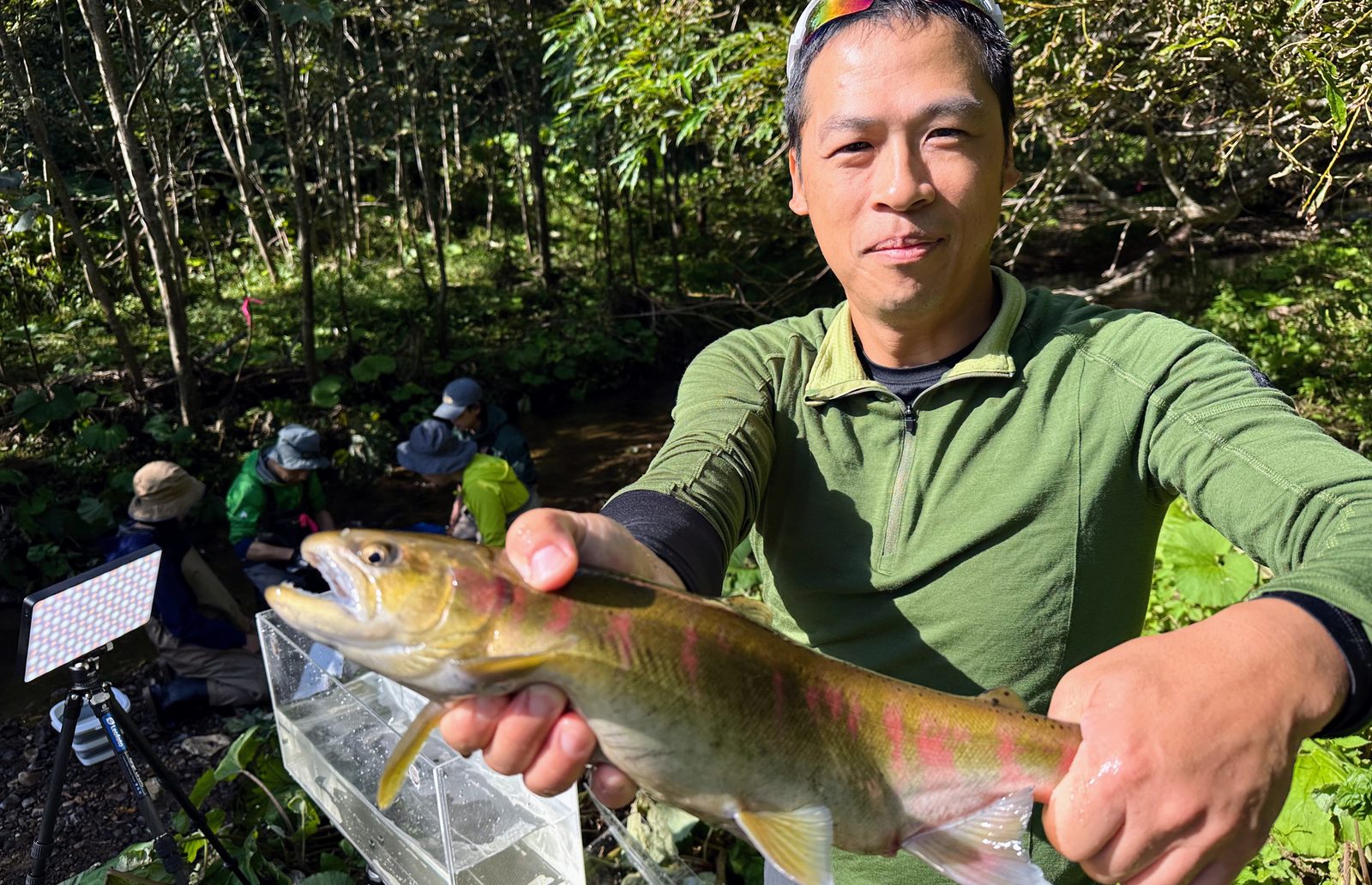
Yi-Chien Lee and colleagues assembled a chromosome-level genome of the Formosan landlocked salmon, resequenced fish sampled across entire streams, and ran simulations of how its populations have changed over time. The lineage split from Japanese masu salmon more than a million years ago and carries extensive chromosome fusions, and we conclude that it is a species in its own right, Oncorhynchus formosanus, rather than a subspecies of masu salmon.
The salmon was thought to have died out in Hehuan Creek decades ago, and the creek was restocked with fish from Chichiawan Creek. The genomes tell a different story: a native Hehuan Creek population survived, with high heterozygosity and unique alleles, and in the simulations it faces a much lower risk of extinction than the Chichiawan Creek population. Our advice is to manage each stream’s population on its own and to avoid moving fish between streams.
Lee et al. (2026) Eco-genomic analysis uncovers precision-conservation targets for the western Pacific’s southernmost salmonid. eLife Reviewed Preprint. doi:10.7554/eLife.111444.1