
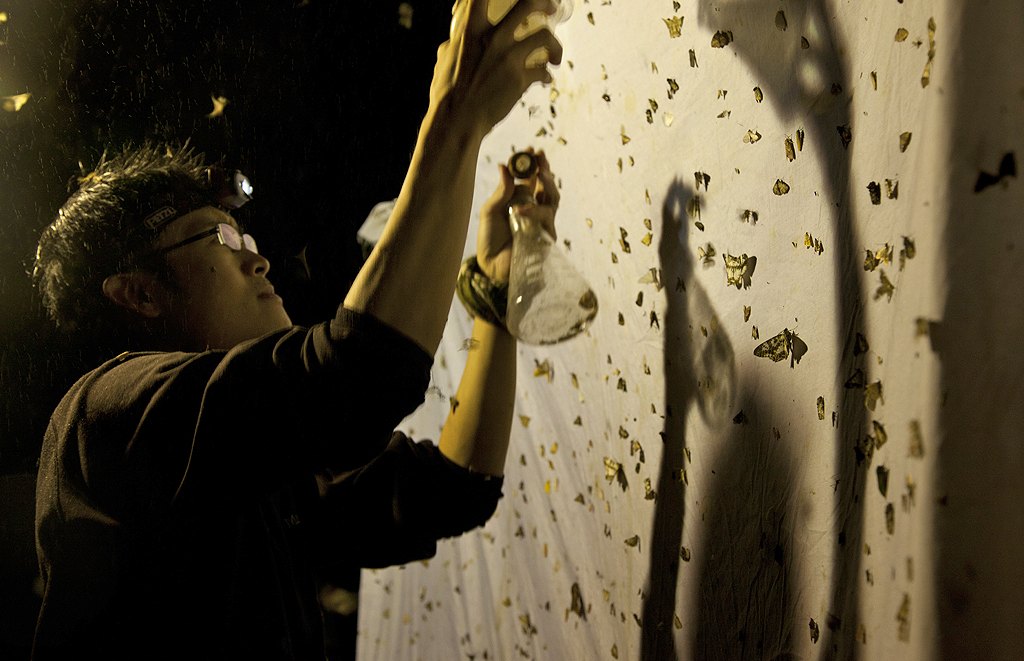
How species respond to warming depends on their thermal traits, and assemblages differ in how many thermal strategies they hold. Across 653 moth species on three Asian elevational gradients, warmer sites support a wider range of coexisting thermal strategies, even though each species keeps a narrow tolerance range; mean temperature matters more than temperature variability (Liu, Hung et al. 2026). Temperature and its variability also shape the body size composition of moth assemblages (Chia et al. 2024).
Within species, populations of burying beetles differ in their reproductive photoperiodism, a locally adapted trait that makes year-round breeding populations at intermediate elevations the most vulnerable to warming (Tsai et al. 2020).